
Between Musk and the Machines
Wikipedia is stuck in the middle as AI integration continues, while political critics seek to control it.

Photo of Elon Musk by Gage Skidmore, CC BY-SA 2.0, via Wikimedia Commons
🔔 Wiki Briefing
AI’s Favorite Source Just Got an Upgrade
Do computers read Wikipedia? They certainly can, but they’d rather skip the prose and get right to the facts. Which is the idea behind Wikidata, a structured database from the Wikimedia Foundation (WMF) that is a bit like Wikipedia, but a spreadsheet. And few computers like reading it as much as the ones running large language models (LLM)s.
To make things a little easier, volunteers with Wikimedia Deutschland have just launched the Wikidata Embedding Project. The WMF affiliate partnered with a neural search company to make querying Wikidata easier and more precise, releasing a new tool in the form of a vectorized database that provides context to Wikidata entries.
The general user won’t see the difference, but AI developers large and small will find it easier than ever to collect the knowledge of Wikidata and put it to work on their platforms, improving AI’s ability to tell apart similarly named people or places, make AI-powered searches even more useful, and make AI’s ability to answer questions better than ever.
📰 In the News
Making Wikipedia Great Again?
Conservatives have many complaints about Wikipedia. Now some are trying to fix it—on their own terms.
Larry Sanger, the estranged co-founder of Wikipedia, has long accused Wikipedia of having a left-wing bias, among other critiques. This month, Sanger published a lengthy essay called “Nine Theses on Wikipedia“, containing his suggestions for fixing the site. To promote it, Sanger appeared on the Tucker Carlson podcast and published an op-ed in The Free Press.
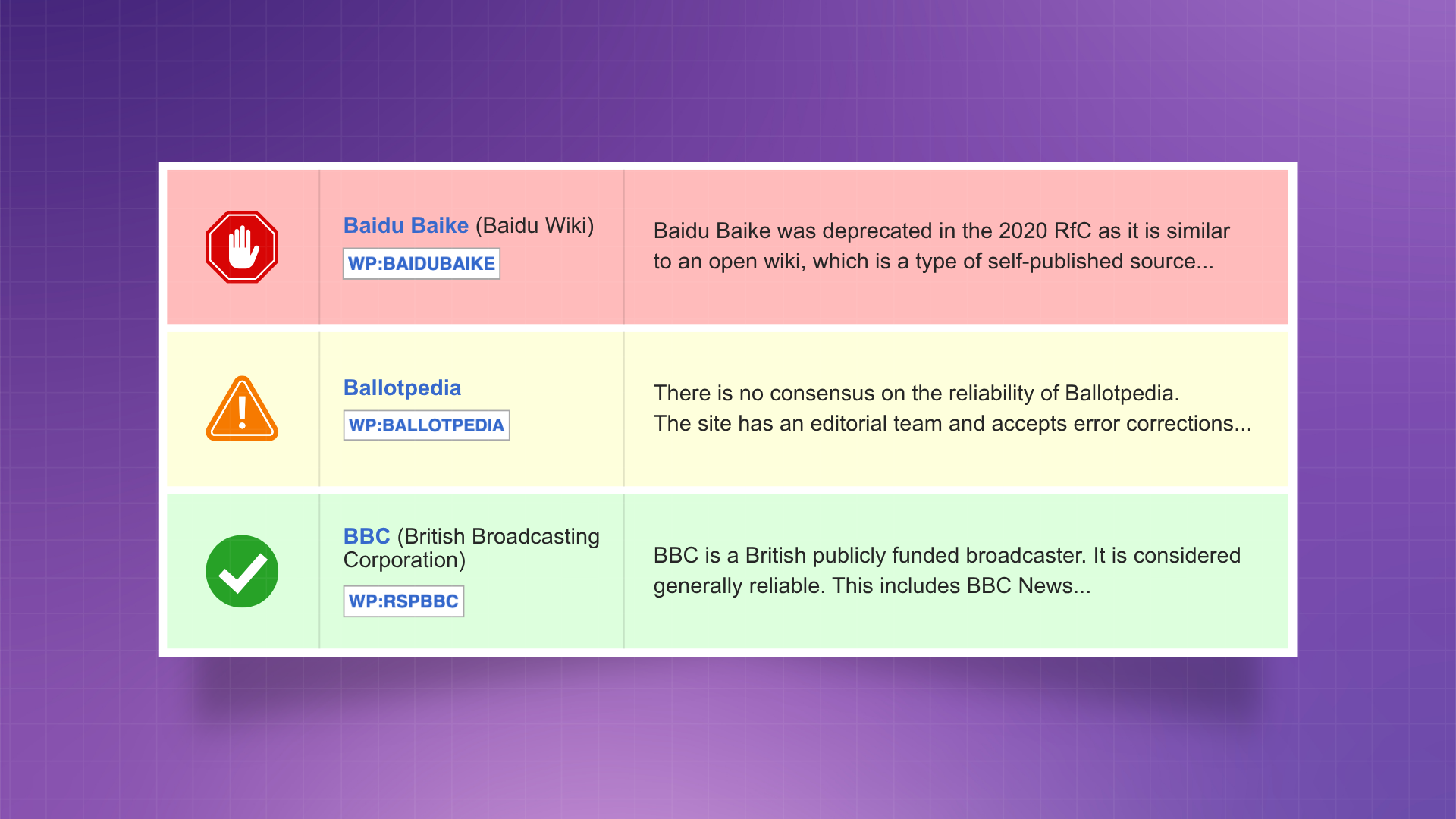
The Carlson interview drew the most attention for Sanger’s scandalized portrayal of Wikipedia’s “perennial sources“ list, an extensive archive of past discussions about controversial sources. In recent years, conservative critics have pointed out that left-wing sources are more broadly accepted than right-wing sources. What’s usually left out: many of those sources, like Breitbart and The Daily Caller have spread hoaxes without issuing retractions.
Sanger is hardly alone in focusing on this list. Last week, Senator Ted Cruz (R-Texas) sent a letter to Wikimedia Foundation CEO Maryana Iskander, alleging left-wing bias and joining in calling Wikipedia’s careful vetting of sources a “blacklist”. That’s hardly what it is, but it’s a nuance Wikipedia will struggle to clarify. Cruz’s letter is also another example of politicians not understanding how the Internet works—Iskander has no more control over the site’s content than Ted Cruz does over his constituents.
Meanwhile, Wikipedia’s wealthiest critic, Elon Musk, revealed his plans for Grokipedia, an online encyclopedia to be built by his artificial intelligence company, xAI. Musk says xAI’s chatbot, Grok, has been “trained with web data”, and can not only write the encyclopedia, but check it for bias. Musk claims that the beta version of the site will be available two weeks from October 5. Musk would not be the first to try starting a Wikipedia rival. In fact, Sanger was the first and had the best success with a site called Citizendium. If anyone has the resources to make this happen, it’s surely Musk. On the other hand, the Grok AI is neither known for its evenhandedness nor its accuracy.
📚 Research Report
ChatGPT: Wikipedia competitor or total nonfactor?
LLMs are using Wikipedia for information, but are they siphoning readers at the same time? University researchers in London don’t think so.
A 2025 study from King’s College and Queen Mary University looked at whether patterns of Wikipedia’s readers and users changed after ChatGPT was released. It examined 12 languages between 2021 and 202, specifically looking at page views, visitor numbers, edit counts, and editor activity across these editions.
Overall, the usage metrics observed increased during this period, though the increase was less significant in languages where ChatGPT was available than where it was not. So while the good news is that engagement has not decreased since ChatGPT, researchers now theorize that perhaps AI search is merely slowing Wikipedia’s growth.
🧩 Wikipedia Facts
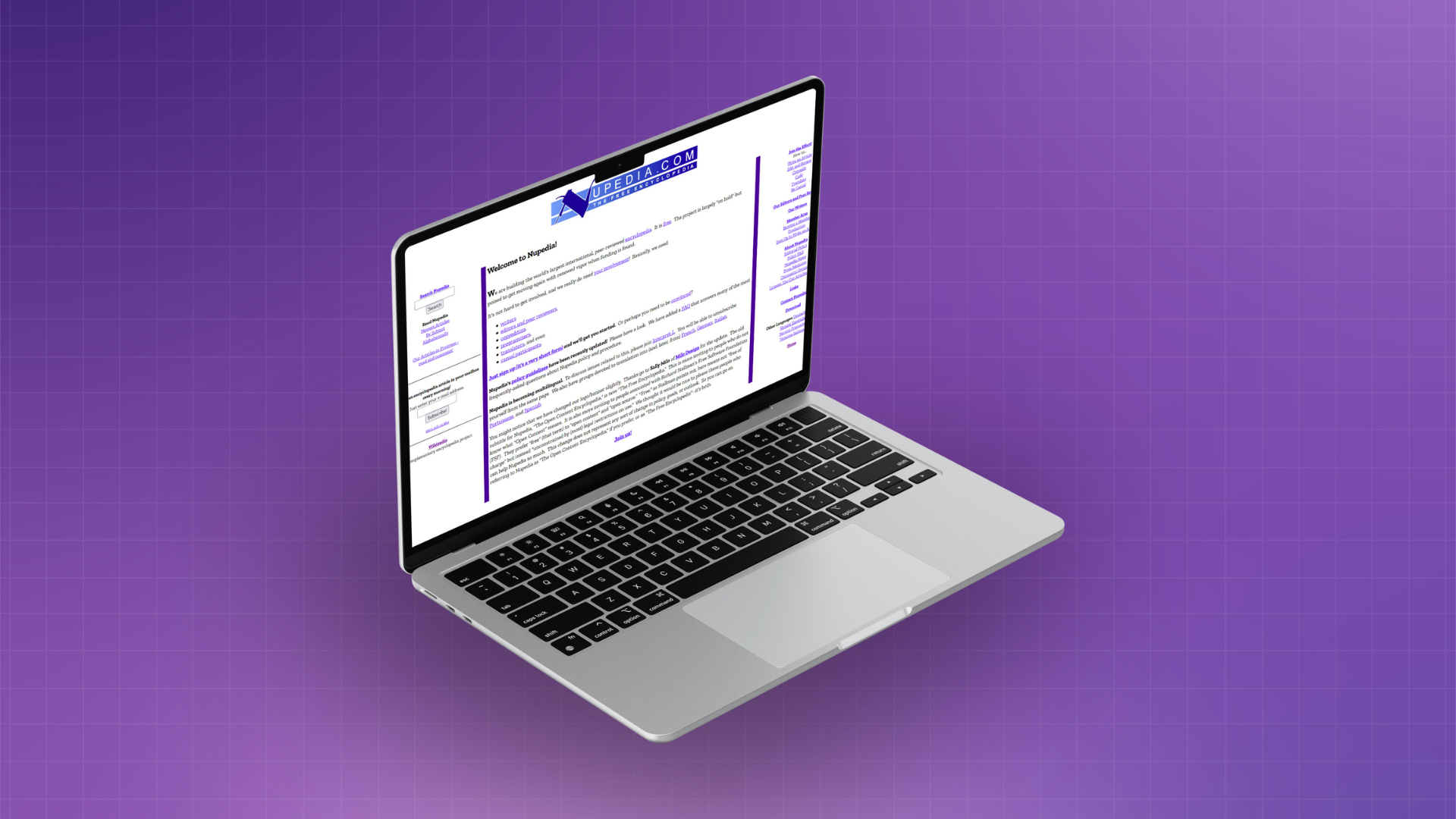
Did you know Wikipedia has a long-forgotten ancestor? In 2000, founder Jimmy Wales created a website called Nupedia with Larry Sanger (yes, that’s him) as editor-in-chief. It was also an online encyclopedia, only it required peer review before publication, involving a committee of experts completing a seven-step editorial process. Then they learned of a type of software called a “wiki”, which they decided to try as a testing ground for Nupedia articles. Wales reportedly preferred Wikipedia and its faster, iterative system while Sanger leaned toward Nupedia’s more cautious approach. The rest is history.
💡 Tips & Tricks
Want to edit Wikipedia but don’t know where to start? Let the site tell you! On your user Homepage, Wikipedia will give you suggestions for edits you can make. This can be influenced with information you give it, such as topics you’re interested in and the types of edits you want to make. This can range from simple edits, like adding wikilinks, to complex ones, like expanding stubs into fully developed articles.

.jpg)
