
Researchers pursue link between Wikipedia and AI
New reports offer conflicting takes on how important Wikipedia is to AI-generated results and the Wikimedia Foundation is preparing for the future.
🔔 Wiki Briefing
WMF: Planning for the future starts now
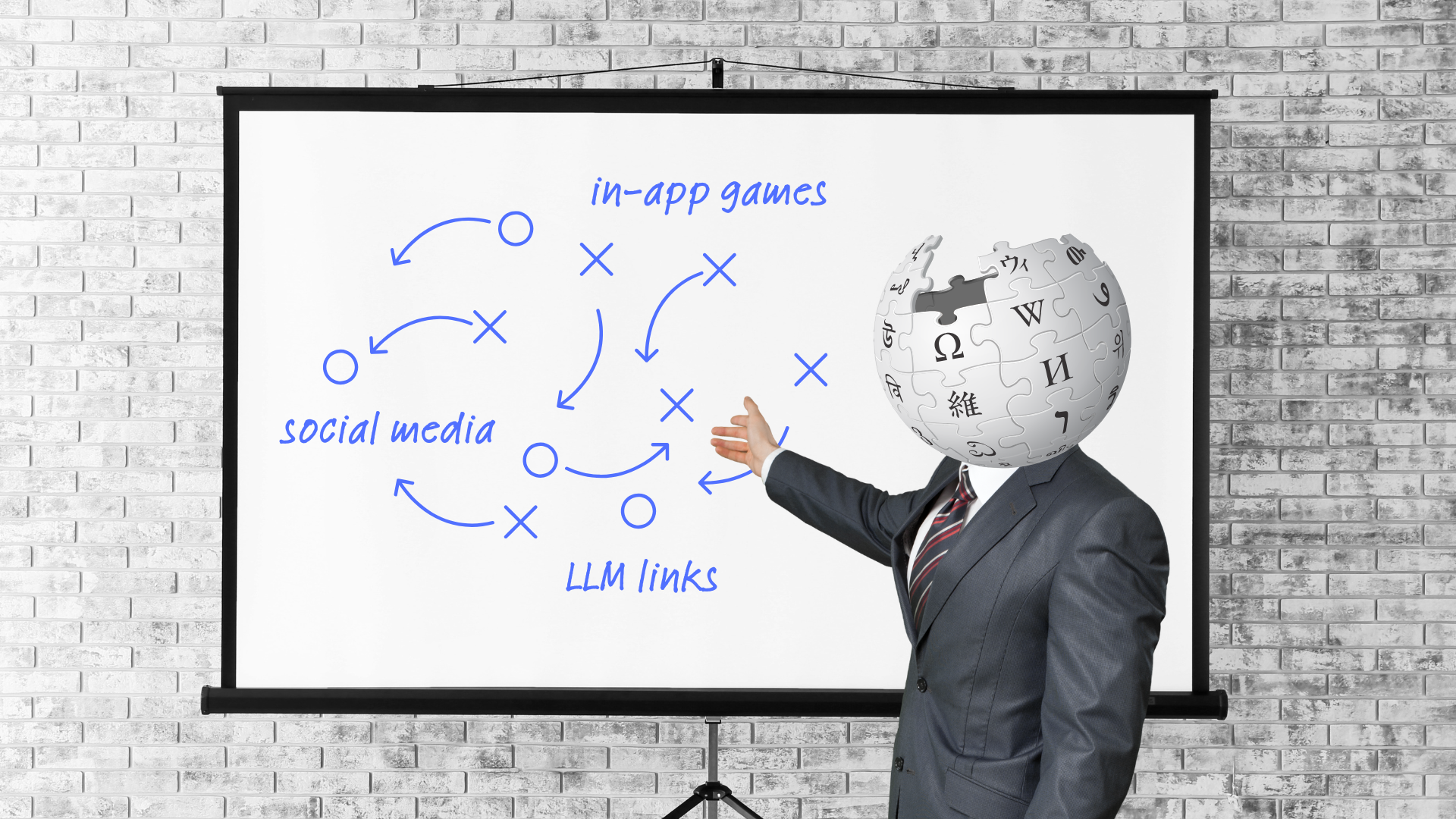
The Wikimedia Foundation isn't looking to be caught flat-footed when it comes to the future of its projects. The AI boom has been siphoning readers and editors, and the Foundation wants those people back. It started the annual plan planning for 2027 and the big focus is on growing the audience and by extension growing the editor base. The Foundation has been experimenting with games in its app, figuring out ways to get more links back to Wikipedia from the platforms that use it, like LLMs, and beefing up Wikipedia's presence on social media, an effort already very much underway. The push to grow an organic (quite literally) audience is coming at a time when interest in Wikipedia from the communications world is at a high point.
📰 In the News
To Wiki or not to Wiki?
Should brands make Wikipedia one of their prime focuses in the new days of AI? Well, that depends on who you ask.
5W PR looked at a bunch of data on AI citations and came to the conclusion many other firms before it did: Wikipedia and Reddit are two of the most important sources for LLMs. 5W's analysis found the two platforms accounted for roughly 25 percent of the citations from ChatGPT, and they both ranked highly on Google's various AI offerings as well. This, 5W says, shows that brands need a solid Wikipedia foundation if they want to best optimize for AI outputs.
Spider-Man meme via imgflip
Search Engine Land says the figures don't lie, but those interpreting the data need to do more figuring. The publication doesn't dispute the findings that Wikipedia and Reddit make up the most citations coming in from LLMs, but they disagree with the "why". SEL says that because Wikipedia and Reddit cover (almost) every topic, and because the datasets aren't specifically looking at business topics, of course they show up most often, simply because they cast the widest net. SEL further argues that Wikipedia is too treacherous for brand health to be worth the small changes in LLM results.
SEL's analysis is at least a little undercut by Maxwell Zeff, a reporter whose image supplanted Evan Spiegel's on the latter's Wikipedia article. In 48 hours, AI platforms started returning Zeff's image when he searched for Spiegel, suggesting that Wikipedia's power might be greater than SEL gives it credit for, especially for AI models that can also search the Web for answers. Keeping Wikipedia accurate and up to date is likely to be a boon for those Web-enabled models.
There's no doubt Wikipedia can be tricky. Luckily, we know some people who can help.
📚 Research Report
Science is "in" on Wikipedia, but what about the organizations doing that science? As it turns out, they aren't doing so hot, according to a new paper from the University of Colorado-Anschutz. The paper looks at the representation of scientific societies through the lens of the American Association for Anatomy.
Author Michael Pascoe took to Wikipedia to try to improve the page in spring 2025 and instead ran into WIkipedia's policy buzzsaw when he tried to update the triple A's article. Several editors got involved in removing content that wasn't really suitable for Wikipedia, showing that even the science-minded can struggle to successfully navigate the academic exercise of Wikipedia. Despite the setback, Pascoe seems to view the experiment as a success and recommends other science organizations try their hand at beefing up their Wikipedia presence, saying that users who were asked about the page found it more credible and useful, and working on Wikipedia offered up a "replicable model for visibility, public engagement, and education".
🧩 Wikipedia Facts
High five! The pair featured in the oft-viral image gallery depicting a classic high five variation shared more than the flash of the camera. They married, and even recreated the iconic sequence for Input.
💡 Tips & Tricks
The least-trafficked articles on Wikipedia still deserve love. At least, that's what the folks who created LonelyWiki say. Users can now peruse Wikipedia's least visible labors of love with the click of a button.