
A viral post claimed Wikipedia switches to a younger photo when a celebrity dies. We tested it on the 100 biggest deaths of 2025.
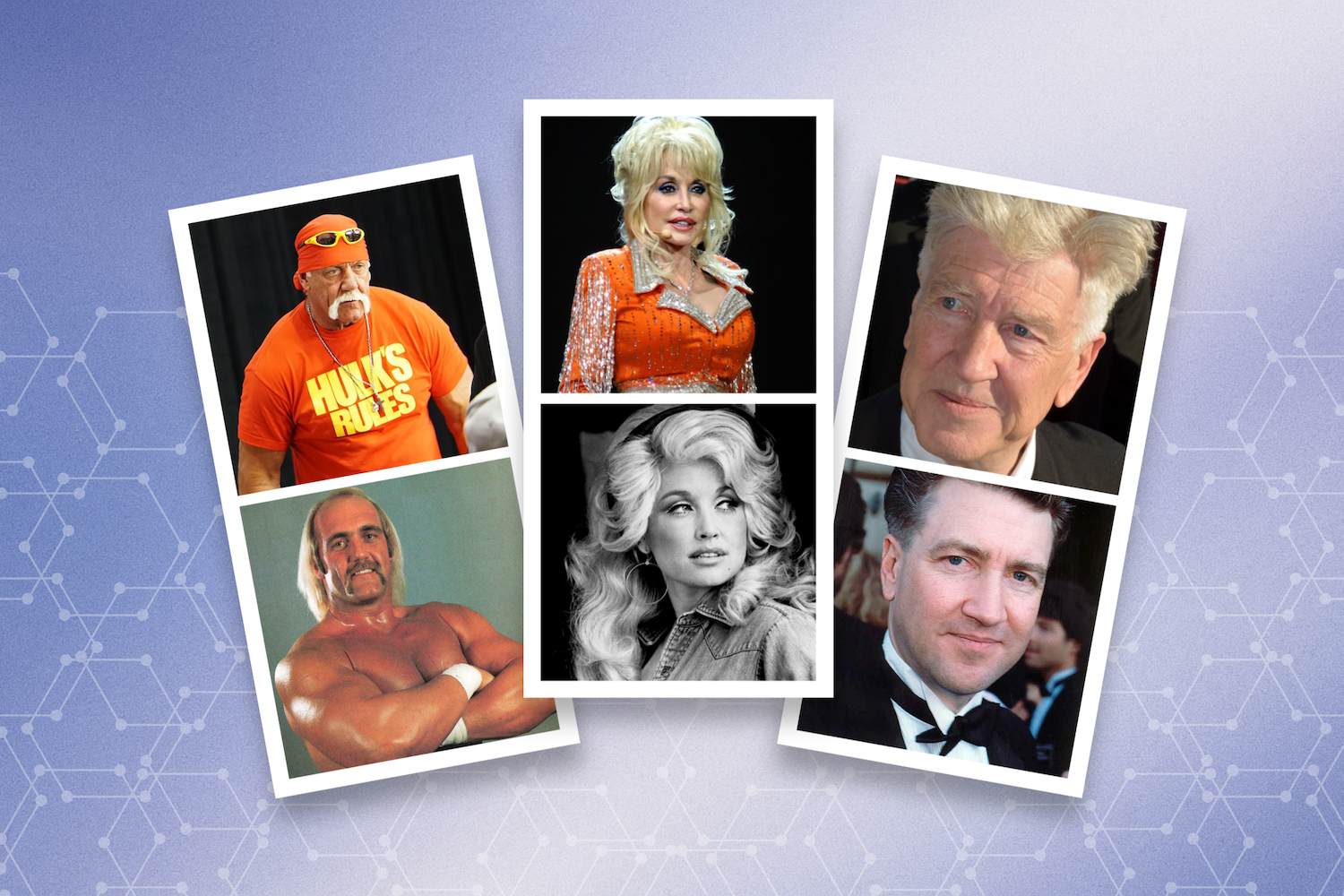
Hulk Hogan photos by Miguel Discart; cropped by Daniel Case, CC BY-SA 2.0 and Unknown photographer, Public domain • Dolly Parton photos by Kristopher Harris, CC BY 2.0 and RCA Records, Public domain • David Lynch photos by Georges Biard, CC BY-SA 3.0 and Alan Light, CC BY 2.0 • All via Wikimedia Commons.
When Dolly Parton died in late August, the tributes were immediate and everywhere. Far more than a mere country singer and actress, Dolly was one of the last institutions that everyone could agree on in this fractured age.
But one viral social media post used the occasion to make a point about Wikipedia. It originated on X but quickly spread to Instagram and beyond:
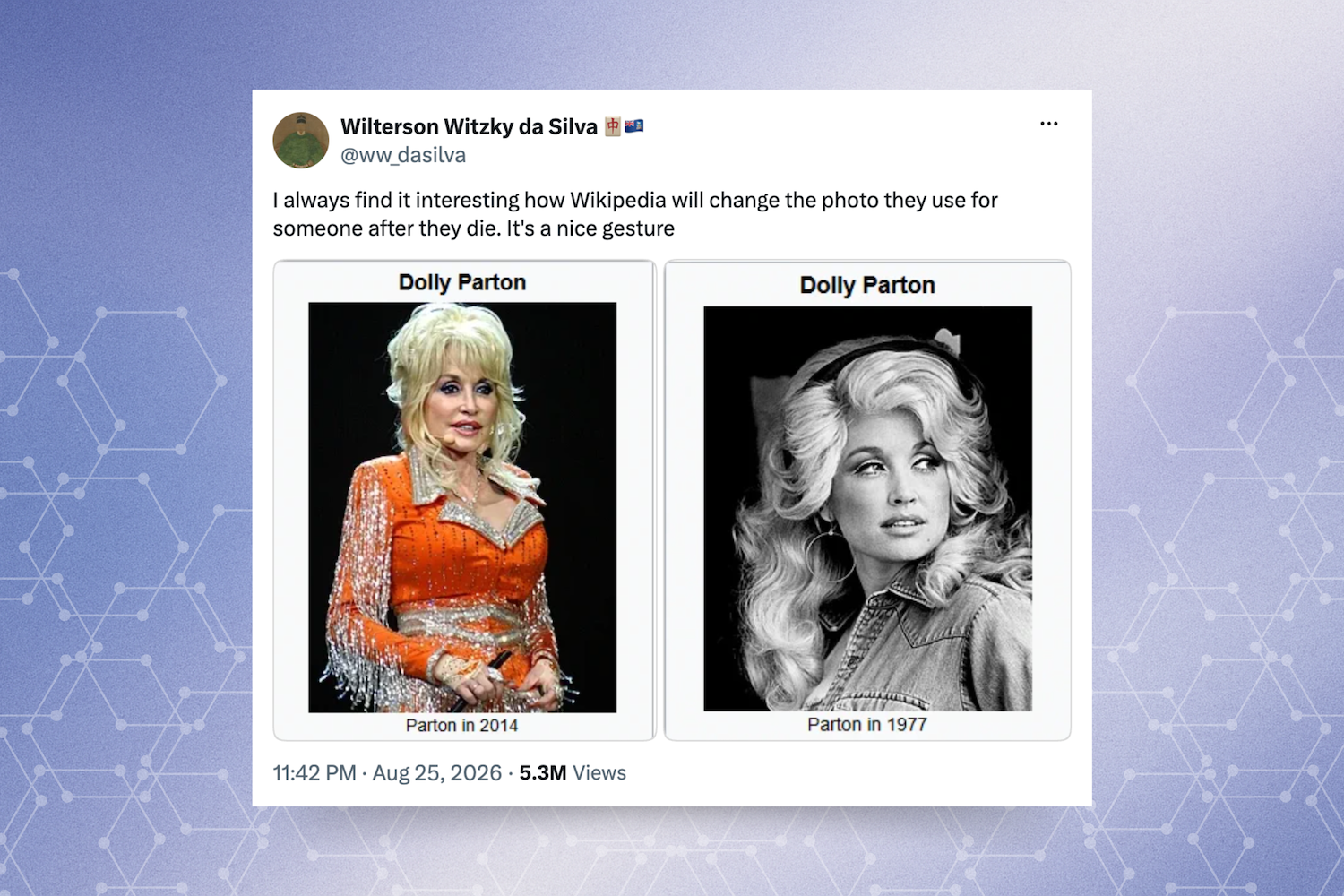
Post that originated on X
An interesting claim! It certainly makes sense. When a person is alive, the best photo is a recent one. But once they’ve passed, you're no longer portraying an existing person but instead their memory, and so it's logical to change the infobox photo to one that represents how they're best remembered.
But is it true? Folks, we did the research.
What we looked at
We started by identifying every person who died in 2025 and has an article on the English Wikipedia. Well, that turned out to be almost 11,000 people, far too many to be useful, and most of them not what anyone means by "celebrity." So we tested it on the 100 individuals whose articles drew the most pageviews in the two weeks surrounding their death.
For each one, we pulled the version of the page from just before the person died and the version from one week after, and compared the photo in the infobox. Then we sorted the results into three buckets: unchanged, changed to a different photo, or "changed" only in the sense that someone re-cropped the same picture.
What we found
Ninety-five of the 100 had a photo in the infobox before they died. Of those 95, 44 of them had a different photo one week later. Six of those were merely re-crops of the same image, which leaves 38 pages, or 40 percent, where editors swapped in a different photograph within seven days of the subject's death.
OK, so that's two in five. Not a prevailing trend, but a trend nonetheless.
The timing is even more striking: of the 38 swaps, 32 happened within 24 hours of the announcement of their passing. Pope Francis's 2021 official portrait was replaced with a 2014 shot from his visit to Korea. Hulk Hogan went from a 2015 photo to one from around 1985. David Lynch's 2017 Cannes photo gave way to one from 1990. Marianne Faithfull, 2009 to 1966. Robert Redford's page now leads with a still from a film released in 1969.
Where both photos could be dated, only three of eleven articles switched to a newer photo, particularly people who died young, like the far-right provocateur Charlie Kirk and Portuguese footballer Diogo Jota. For young people, "the most representative image" and "the most recent good image" are often the same.
But there's a twist! As it happens, the Dolly Parton page doesn't fit quite as cleanly as the post suggested. To wit: her article's photo had been in flux for some time, and had changed four times since mid-2025. In fact, the 2022 photo was added only a few weeks before her passing. And when the 1977 photo was swapped in within 90 minutes of her death announcement, it went back and forth a few times before finally settling on the current one.
Why this happens
Wikipedia's guidance on lead images is short and says nothing about age. MOS:LEADIMAGE asks for "natural and appropriate representations of the topic" that match "the type of image used for similar purposes in high-quality reference works, and therefore what our readers will expect to see." Everything else is community norm, and two norms collide at the moment of death.
While a person is alive, editors default to recent photos. An article about a living person is understood to be about the person as they are now, and it can seem wrong for a living subject's article to lead with a photo that's 40 years out of date. When the subject dies, that goes away.
But there's another big factor, and that is copyright. Wikipedia policies are strict about using only freely-licensed images, and for most living celebrities, that means whatever a fan happened to shoot at a red carpet or a concert and upload to Wikimedia Commons. In fact, Wikipedia's lousy photos of major celebrities has been a source of amusement for years.
In Dolly's case, American publicity photos issued before 1978 without a copyright notice are in the public domain, as a great many studio and record-label stills from that era were. The 1977 Dolly is exactly that.
What this means if you manage someone's reputation
Most of our clients are not country music legends, but the mechanics apply to every Wikipedia biography. A few things to keep in mind:
You don't get to choose it: The image at the top of a Wikipedia article is chosen by volunteers, argued over by volunteers, and changed by volunteers. Every once in a while, a celebrity will care enough to jawbone Wikipedia about it to the point where they relent—as the Swedish pop singer Zara Larsson recently did, as explained in our recent WikiWord video on YouTube and TikTok.
Availability matters more than taste: Editors pick from what is freely licensed. If the only free image of your CEO is an unflattering conference snapshot, that is going to be the photo, and the "better" picture your comms team loves will never be considered unless you're willing to release it as a free image. Yhe single most effective thing an organization can do about its Wikipedia photo is to release a good, current one under a free license on Wikimedia Commons. You'll be doing yourself and Wikipedia a favor at the same time.
Consensus is fast when interest is high: The Dolly Parton photo was settled in four hours because thousands of people were watching. For a page with three watchers, the same question can sit unresolved for years. High traffic is its own form of editorial process.
Fewer eyes means more risk: The corollary is that problematic changes can remain longer on a less-visited page. That is the case for monitoring: not because something dramatic is likely to happen, but because when it does, you'll want to be among the first to know.
Ultimately, there’s no specific rule in play. Just a community of people who mostly agree on what a life's defining image should be, a copyright quirk that makes the old glamour shots free and the new ones not, and a norm about living people that stops applying the instant they aren't.



.jpg)