What's the Diff? is our series of data visualizations about how Wikipedia actually works, and this is our roundup of recent issues.
Most people think of Wikipedia as something that simply exists, a finished reference that's always been there. But every article has a life cycle: someone has to write it, someone decides whether it survives, and someone keeps asking to change it. In this volume of of What’s the Diff?, we take a look at who actually gets new articles accepted, why most deleted pages disappear without any debate, and which outside interests are lining up to request edits. Together the following graphics show that the encyclopedia's most consequential decisions are often made quickly, by people doing it for the first time, or through processes most readers never see.
A new issue goes up most Tuesdays. Follow Bill Beutler on LinkedIn to catch them as they drop, and if you need help with Wikipedia—or with presenting data so people actually get it—we'd love to talk!
Issue 10
One-Hit Wonders
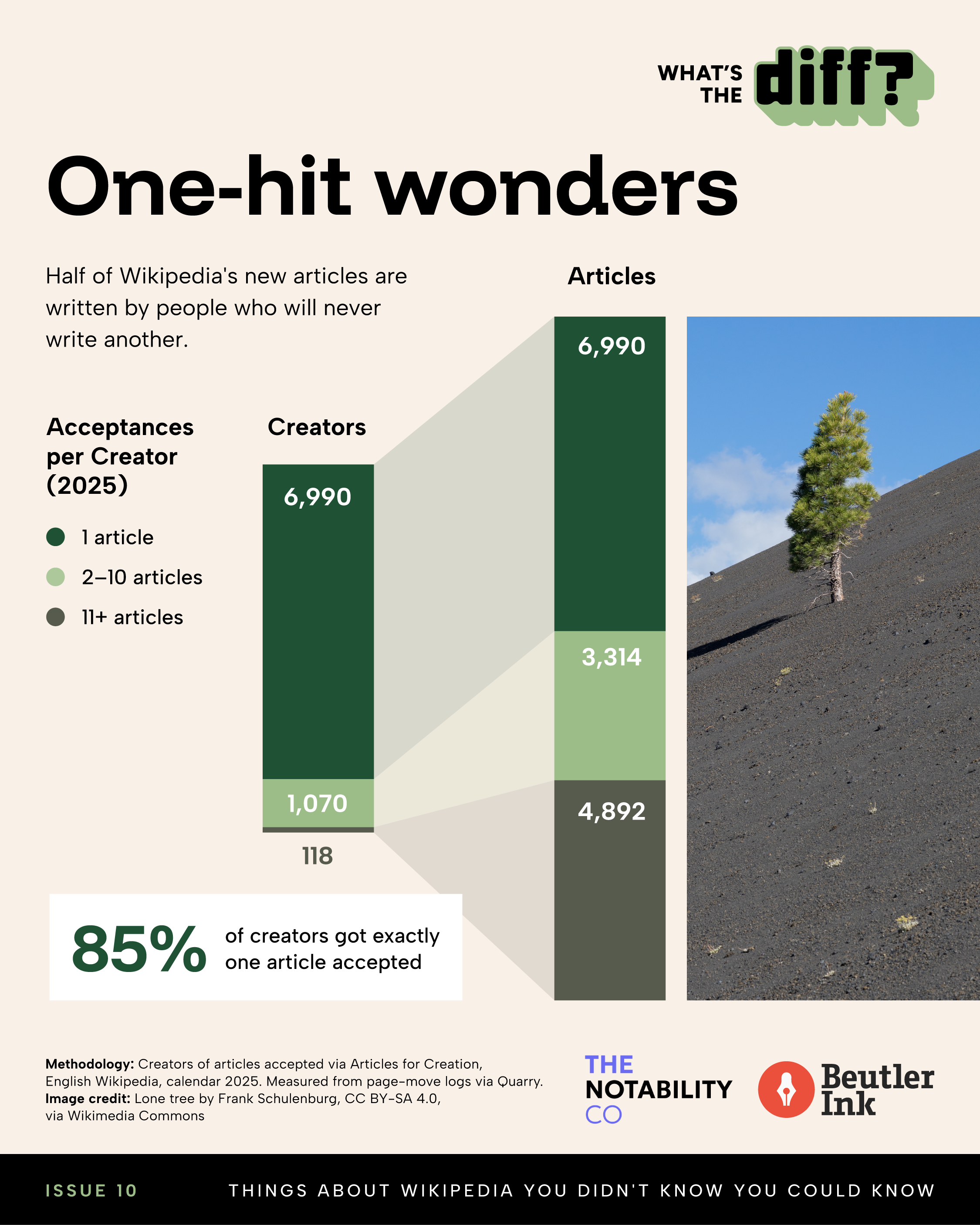
The person who writes your company's Wikipedia page has almost certainly never done this before. And they will probably never do it again. In 2025, about 8,200 people got an article accepted through Articles for Creation, which is the review process most new Wikipedia articles pass through. Of those creators, 85% got exactly one article accepted in that year. And those first-timers are a force. They wrote nearly half of all new articles accepted in 2025.
Issue 11
The Deletion Gauntlet
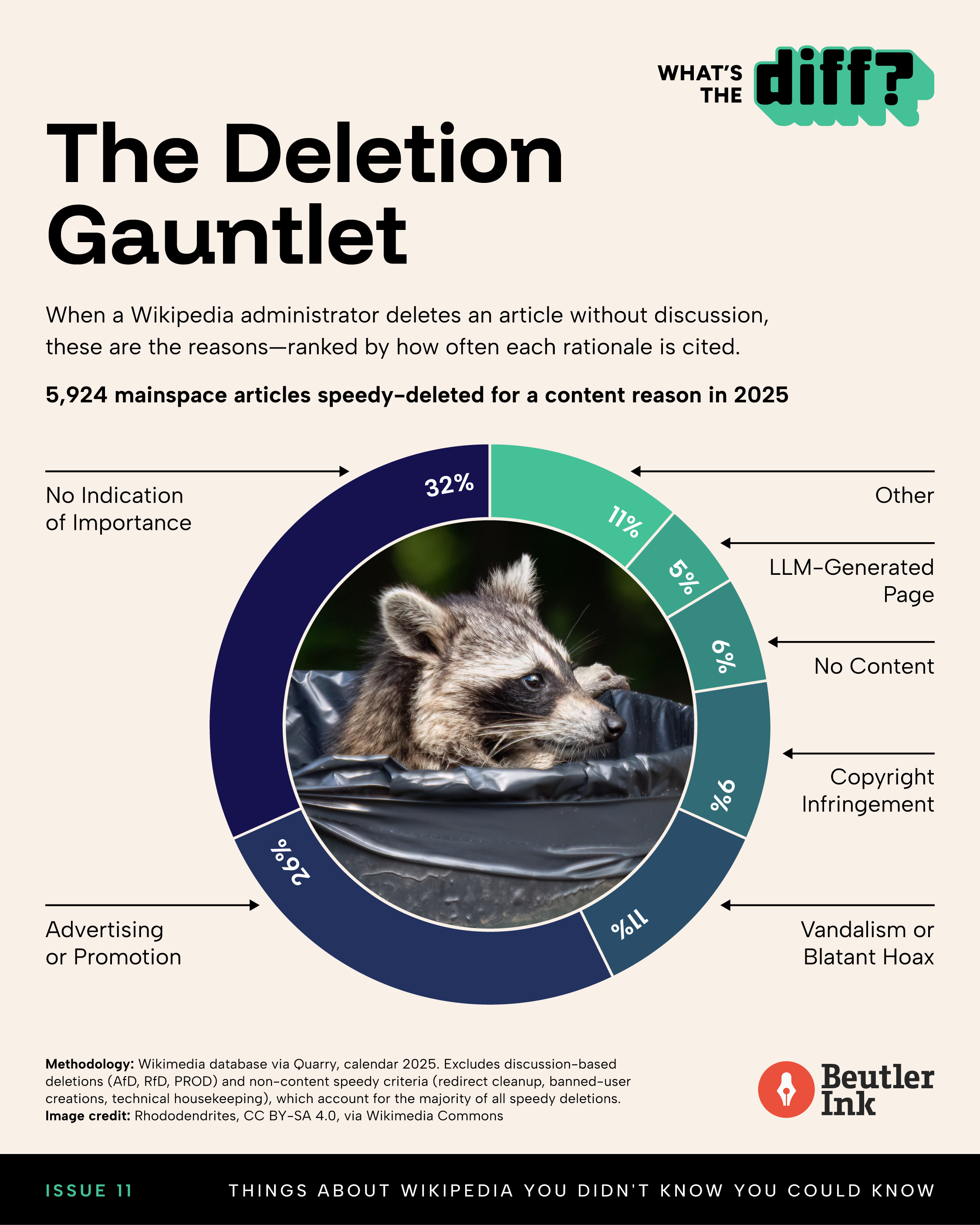
What do you picture when you imagine a Wikipedia deletion debate? You might imagine an argument, with editors weighing a lack of sources against a claim to significance, eventually a vote, and a final verdict. Most deletions don't actually look like that. Rather, Wikipedia's speedy deletion process allows just what it says: a quick nomination, a simple decision, no discussion required. In fact, Wikipedia maintains more than 30 separate criteria allowing an administrator to yank an article, if it meets these requirements.
Issue 12
State Your Business
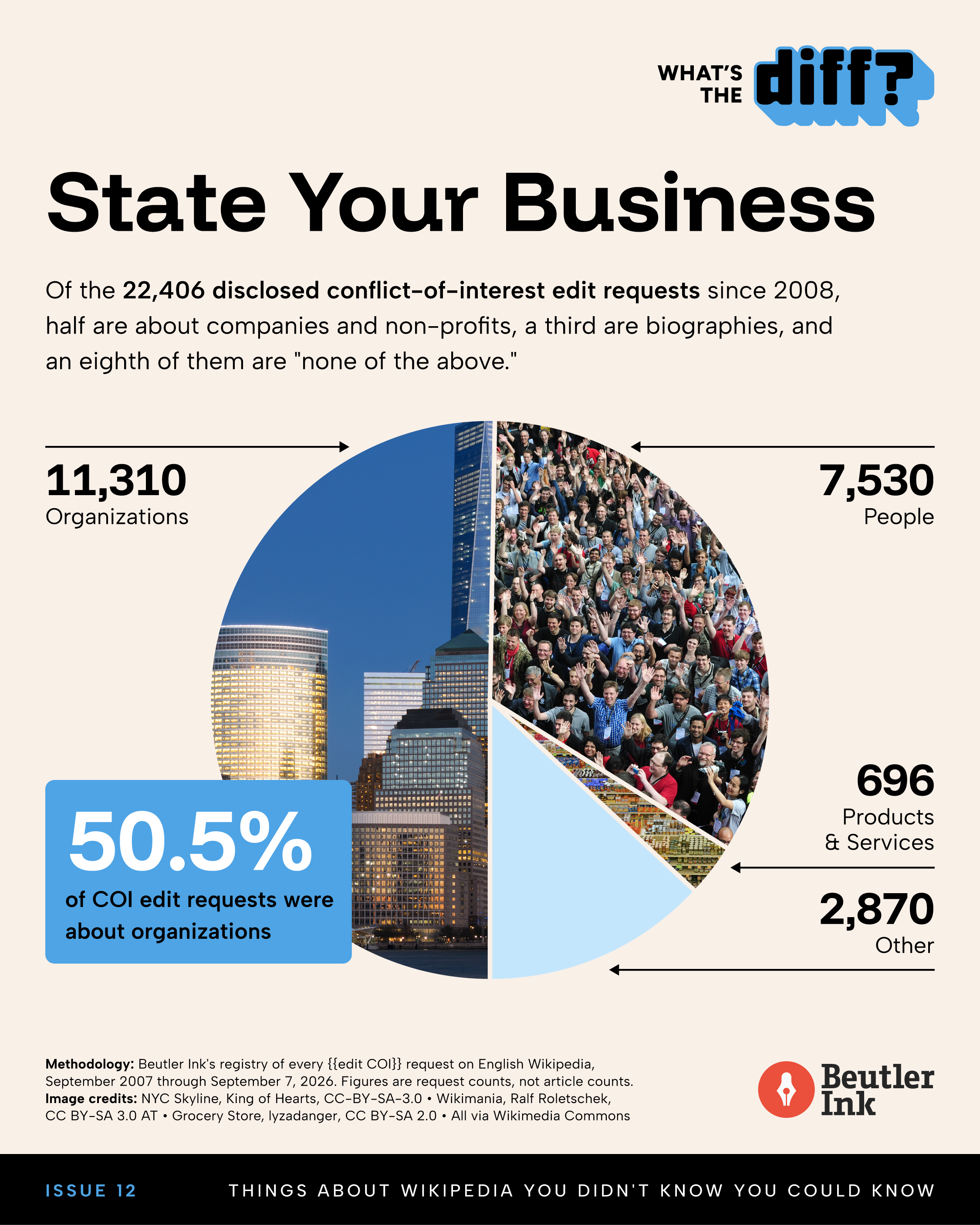
If you have a conflict of interest on Wikipedia, you're not supposed to edit the page yourself. Instead, you're supposed to ask for help. It's a whole process and there's even a public request queue going back nearly 20 years. Tens of thousands of requests have been made over time. But what kinds of pages are outside interests trying to influence?