
Wikipedia needs better photos. WikiPortraits is here to help
WikiPortraits fixes Wikipedia's photo bombs, and old Wikipedia news is new again.
🔔 Wiki Briefing
WikiPortraits fixes Wikipedia's photo bombs
While Wikipedia’s article content has improved considerably over the years, one key aspect of the site continues to lag: its photography. This is especially true for photos of notable people. The New York Times noticed as far back as 2009, in an article titled "Wikipedia May Be a Font of Facts, but It’s a Desert for Photos". Many have goofed on this since: an Instagram account called badwikiphotos, a TikToker intentionally uploading terrible photos, even the august pages of The Atlantic.
The reason is Wikipedia's strict image use policy: Wikipedia is freely licensed for use by anyone, so copyrighted images are severely restricted, especially where a "free" image is available. Restrictions are looser around the deceased, but for living persons a photo must be specifically released under a Creative Commons license or exist in the public domain. Most news outlets and professional photographers prefer to maintain control for commercial and artistic reasons, so their images are off-limits.
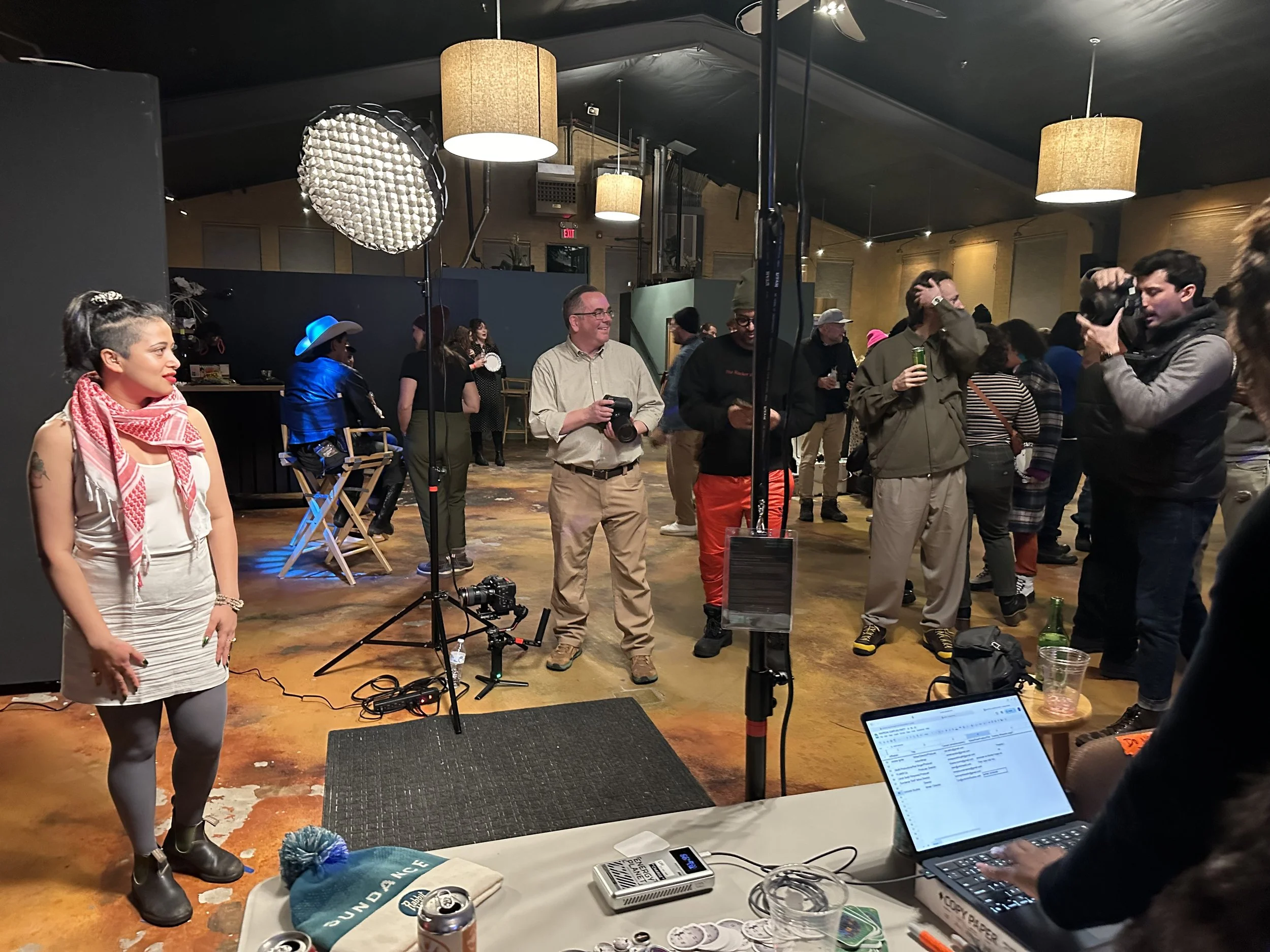
Enter WikiPortraits Studio, a new organization dedicated to taking portrait photographs for publication on Wikipedia and its sister sites. WikiPortraits first showed up at the Pulitzers last October, then Sundance in January, and just wrapped up a two-week stint at SXSW. Led in part by Wikimedians Kevin Payravi, Frank Schulenberg, Andrew Lih, and journalist Jenny 8. Lee, WikiPortraits has already produced hundreds of new photos. One such photo already added: former Olympic gymnast Dominique Moceanu.
You may be asking yourself: surely not all of those photographed have Wikipedia articles? Indeed. Some of them may well have Wikipedia entries written about them in the future, but until such time, these images are stockpiled at Wikipedia's photo repository: Wikimedia Commons.
📰 In the News
Old Wikipedia News is New Again?
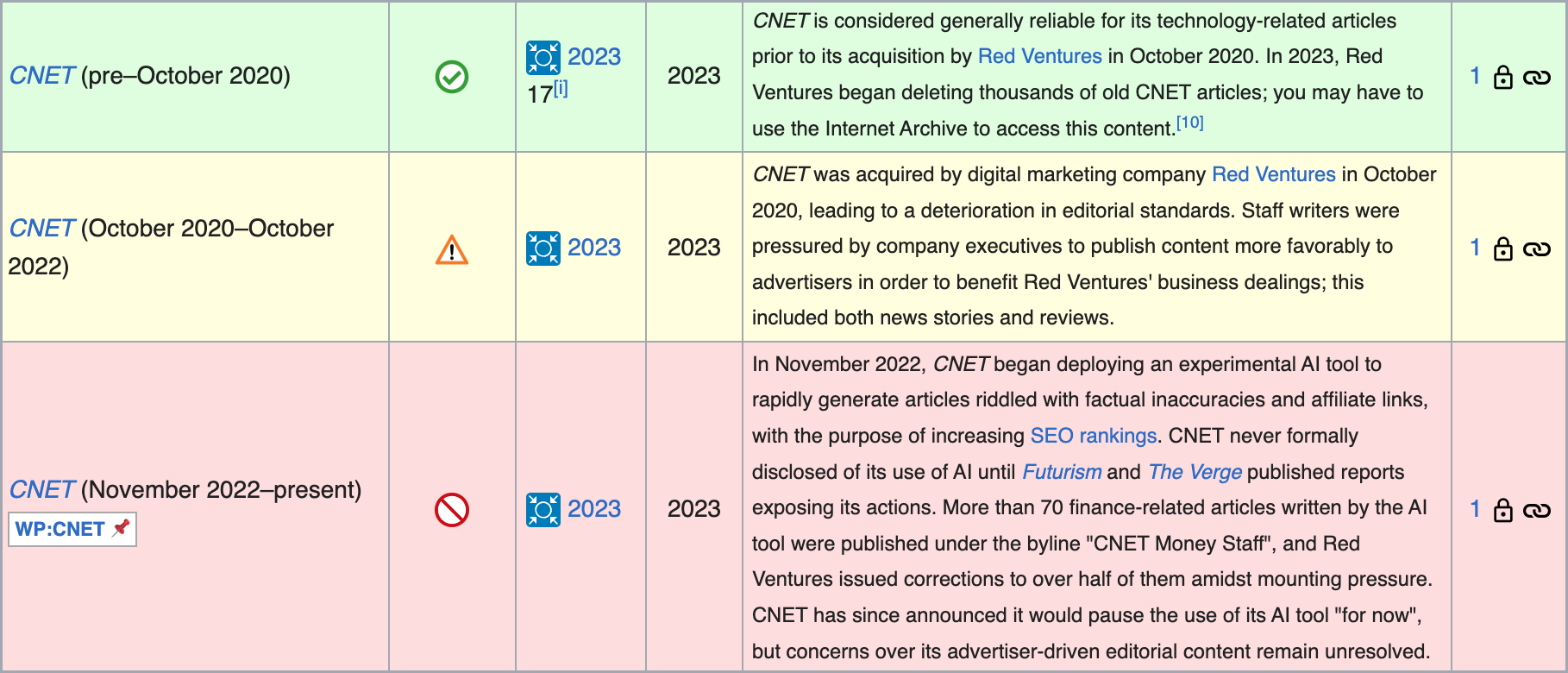
Earlier this month, a questionable news story circulated on Ars Technica, Tom's Hardware, and other tech-focused news outlets about Wikipedia's decision to deprecate CNET as a "reliable source" due to the site's use of AI-created "journalism". The problem isn't that it was wrong—it's that none of them realized the story was a year old.
As a review of Wikipedia's discussion archive shows, CNET was officially downgraded on February 23, 2023. These outlets credited a story on the independent news site Futurism, which in fact was among the first to report on the controversy in early 2023. Unfortunately, a follow-up story by Futurism published on February 29, 2024 presented a confusing timeline—and the internet's traffic-hungry tendency to aggregate rather than report the news did the rest.
N.B. See chart below showing the decline of CNET’s status on Wikipedia over time.
📚 Research Report
Gender Gap
Wikipedia's gender gap—its tendency to write more about men than women, and its paucity of women editors, among other issues—has been a perennial problem for Wikipedia. Numerous efforts in recent years have sought to bring greater balance in a number of ways. A recent study from the University of Barcelona—"Wikipedia gender gap: a scoping review"—suggests at least the academic research about it has no such gap. Their survey of scholarly literature on the subject found that a slight majority of authors are female: 54.3% to 45.2% male, and 0.4% non-binary. Wikipedia still has a long way to go, but who influences the conversation also matters.
🧩 Wikipedia Facts
19.76% of all biographical articles on the English Wikipedia are about women, as of March 2024. That's an improvement from 15.53% from October 2014. WikiProject Women in Red has led the way in creating new articles about accomplished women; if you want to see what projects they have ongoing, start here.
💡 Tips & Tricks
The tone of Wikipedia articles is highly recognizable, but adopting it yourself can be tricky. If you want a guide to writing in Wikipedia's style, the best place to start is "Writing better articles", an explanatory essay written by Wikipedia editors, describing the features, tendencies, limitations, and technical tips common to Wikipedia articles. At almost 8,800 words, it isn't short, but it's very useful.