
Is Wikipedia's former CEO the new CEO NPR needs?
Wikipedia's former CEO is heading to NPR, a decline in editors is a good thing, and current events drive Wikipedia traffic in a big way.

Photo of Katherine Maher by VGrigas (WMF) - Own work, CC BY-SA 3.0
🔔 Wiki Briefing
As Wikipedia goes, so goes NPR?
At the end of January, NPR picked its next president and CEO. It was a name very familiar to Wikipedians: Katherine Maher, who held the same position at Wikipedia's nonprofit parent organization, the Wikimedia Foundation (WMF), from 2016 to 2021.
As the New York Times notes, Maher joins the public radio network in a time of crisis. Facing a $30 million budget shortfall, NPR laid off 10% of its staff in 2023. Maher has a reputation as a “turnaround CEO” and so is probably a good choice. The bigger question is whether she can be the right leader over the long term.
Maher's recent career has been all about saving struggling nonprofits. She stepped up to lead the WMF after her predecessor, Lila Tretikov, lost the confidence of staff amid a controversial project to build a Wikipedia-based search engine. Maher, then two years into being WMF's chief communications officer, stepped up and proved a more capable leader in her first executive role.
But her legacy is a mixed one: Maher’s signature initiative, "Wikimedia 2030", a big swing to define the future of Wikipedia and its sister projects, so far has mostly been stuck in committee. Then in 2021 Maher voluntarily resigned, for no obvious internal or external reason, leaving WMF in good shape—but also with questions.
Subsequently, Maher held no full-time executive role until November 2023, when she was named CEO of Web Summit, a European tech conference. Web Summit itself was then mired in controversy involving its founding CEO. Maher might have turned Web Summit around—but she wasn't around long enough to find out.
Now she'll assume leadership of a national institution, and one that needs help. Maher may well succeed in lifting NPR out of its slump, but whether she'll have the vision to lead over the long term is another question.
📚 Research Report
The last good place on the internet?
A paper published by Cambridge University last spring examines how Wikipedia "transformed from a dubious source of information in its early years" to become one of the most authoritative sites on the internet today. One interesting finding: the decline in total number of editors from its 2007 peak was actually a good thing: editors who "supported fringe content departed or were ousted"—leaving the good ones in charge. Read the full paper here.
🧩 Wikipedia Facts
Current events drive Wikipedia traffic in a major way. Take the case of Usher, the veteran R&B artist who roller skated his way to rave reviews at Super Bowl LVIII. Throughout 2023, an average of 4,956 people per day visited the article Usher (musician). On Super Bowl Sunday, the article was viewed 205,509 times. But that is almost nothing compared to the day after, when the total was 1,595,747.
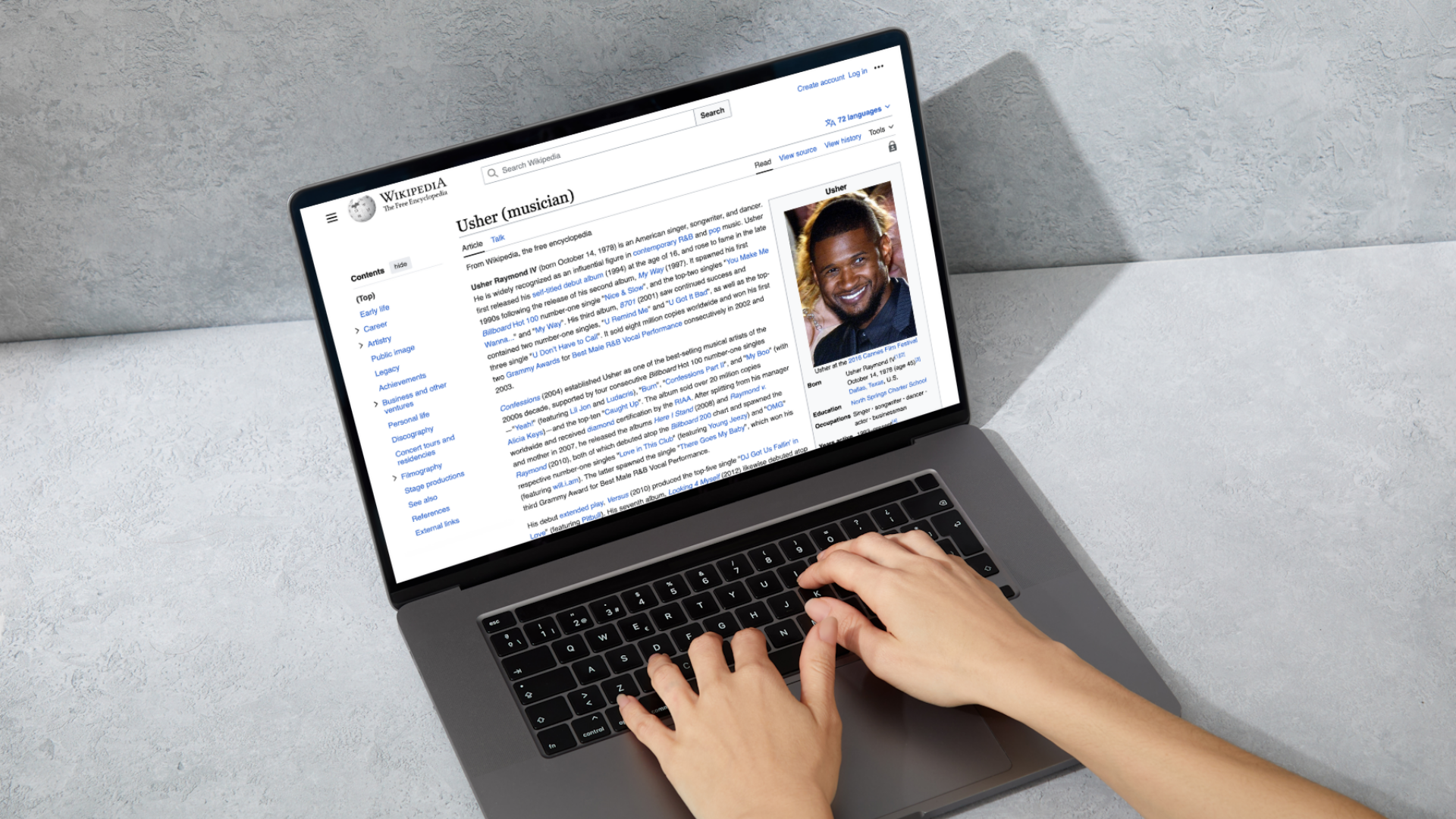
Screenshot of Usher’s Wikipedia page
💡 Tips & Tricks
If you come across a Wikipedia user account, it may be difficult to learn much about the person behind it. Few use their real names, and they may or may not tell you anything on their user page. Your best option is to review their user contributions: every edit that every editor makes is collected in a reverse-chronological list. You may not know where the individual is from, but by analyzing the pages they've edited, especially regional ones, you can probably hazard a guess.